
8 Red Flags When Hiring an Insulation Contractor in Barrie
And the Exact Questions to Ask Before You Sign Anything
The insulation contractor you choose determines whether your grant application succeeds or fails. Most Barrie homeowners don’t know what to look for — and the wrong choice can cost $4,000–$8,000 in denied funding on work that is already done.
Why Contractor Selection Is the Highest-Stakes Decision in the Grant Process
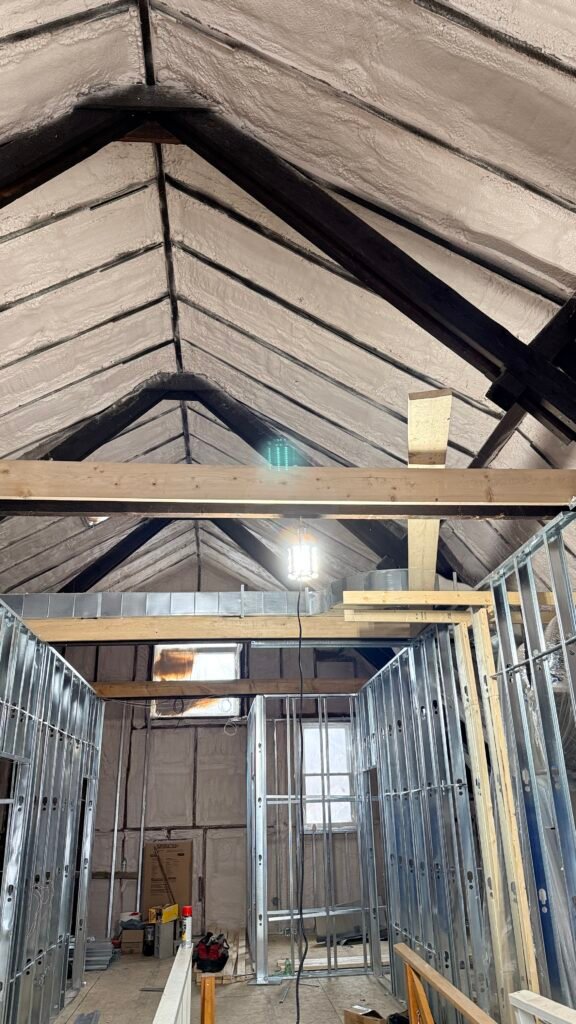
Every other part of the insulation grant process — the audit, the application, the documentation — depends on your contractor executing the installation correctly. A pre-retrofit audit identifies the right zones and R-value targets. A post-retrofit audit verifies that the work matched those specifications. If it did not, the grant is denied.
The problem is that a failed insulation project looks identical to a successful one from the homeowner’s perspective. The attic is full. The rim joists are covered. The house feels warmer. But if the product installed is not on the approved list, if the R-value target was missed by 10%, or if the contractor’s documentation is incomplete, the grant application goes nowhere and the work cannot be undone.
The eight red flags below are drawn from the most common failure points in Ontario grant projects. Each one is identifiable during the contractor selection process — before any work begins.
The 8 Red Flags
🚩 Red Flag 1: They Quote Before Seeing Your Energy Audit Report
A grant-eligible insulation project must be installed to the exact zones and R-value targets identified in your pre-retrofit energy audit report. Any contractor who provides a detailed quote before reviewing that report is quoting against their own assumptions — not your actual grant-eligible specification.
This leads to the most common grant failure: installation that completes the work but misses the grant target. An attic brought to R-40 instead of R-60. Rim joists addressed in three bays but not the full perimeter. Air sealing omitted because the contractor did not realize it was in scope. Each of these looks finished. None of them qualifies for the grant amount the homeowner expected.
“Can I send you my pre-retrofit energy audit report before you provide a quote? I want your quote to be based specifically on the zones and R-value targets the advisor identified.”
🚩 Red Flag 2: They Cannot Name Specific Grant Programs They Have Worked With
Ask any prospective contractor which specific grant programs they have completed projects under. A contractor with genuine grant experience will answer immediately: Canada Greener Homes, Ontario HER+, Enbridge rebates. A contractor who is marketing grant eligibility without real project experience will give vague answers about “government programs” or “rebates.”
The distinction matters because each program has specific product approval requirements, documentation formats, and submission procedures. A contractor who does not know these details will produce documentation that is technically incomplete even if the installation itself is correct.
“Which specific grant programs have you submitted applications under in the last 12 months? How many of those passed the post-retrofit audit on first submission?”
🚩 Red Flag 3: They Suggest Starting Work Before Your Pre-Retrofit Audit Is Filed
This is the only red flag on this list that eliminates grant eligibility with absolute certainty. Any insulation work — including preparatory work like clearing old insulation, running caulking, or installing ventilation baffles — that takes place before your pre-retrofit audit is officially filed disqualifies the project. No exceptions. No appeals.
Some contractors suggest starting early to “get on the schedule” or to “do the easy prep work first.” These contractors are either unaware of program requirements or indifferent to your grant eligibility. Either is disqualifying.
“Can you confirm in writing that no work will begin at my property until my pre-retrofit energy audit has been completed and filed? What is your process for verifying this before scheduling installation?”
🚩 Red Flag 4: Their Invoice Format Is Vague or Generic
Grant applications require contractor invoices that specify: the exact product name and manufacturer, the installed R-value, the installation zone (attic, rim joists, exterior walls), and the square footage covered. An invoice that says “insulation installation — $6,500” will not support a grant application regardless of how good the actual work was.
Ask to see a sample invoice from a previous grant project before hiring. A contractor whose sample invoice contains all the required fields is a contractor whose documentation process is ready. A contractor whose sample invoice is a single line item is a contractor who will create problems at the post-retrofit stage.
“Can you show me an example invoice from a previous grant-eligible project? I need to see that it specifies product name, manufacturer, R-value, installation zone, and area covered for each line item.”
🚩 Red Flag 5: They Cannot Provide Product Specification Sheets
Every insulation product installed in a grant-eligible project must be supported by a manufacturer’s product specification sheet confirming its R-value per inch and approved installation parameters. These sheets become part of your grant application documentation and are reviewed during post-retrofit audit verification.
A contractor who cannot immediately produce spec sheets for the products they plan to install — or who says “I’ll get those to you later” — is a contractor whose documentation process is not grant-ready. You need these documents before the post-retrofit audit, not after it.
“Can you provide the manufacturer specification sheets for every product you plan to install before we sign the contract? I need these for my grant application documentation.”
🚩 Red Flag 6: They Pressure You to Decide Before Your Audit Is Complete
High-pressure tactics and grant-eligible projects are fundamentally incompatible. A homeowner who signs a contract before their pre-retrofit audit is complete may commit to a scope of work that does not match what the audit recommends — creating mismatches that reduce grant eligibility or disqualify specific zones entirely.
Additionally, a contractor who applies pressure before you have seen your audit report is a contractor who wants to control your scope of work rather than respond to it. In a grant context, your scope of work is dictated by your certified energy advisor’s report — not by the contractor’s preferred product or installation method.
“I won’t be signing a contract until I have my pre-retrofit audit report in hand. If that timeline does not work for your scheduling, I understand — but I need to see the audit findings before committing to any scope of work.”
🚩 Red Flag 7: They Have No Relationship With a Certified Energy Advisor
Experienced grant contractors in Barrie have working relationships with one or more certified energy advisors. They understand what the audit report requires, they know which R-value targets trigger maximum grants, and they can communicate directly with the advisor if clarification is needed on scope or documentation requirements.
A contractor who has no connection to any certified energy advisor in Simcoe County — who treats the audit as someone else’s problem — is a contractor who is not integrated into the grant process. That disconnection tends to produce documentation gaps that only become visible at the post-retrofit audit stage.
“Which certified energy advisors in the Barrie area have reviewed your completed grant projects? Can you provide a reference from one of them?”
🚩 Red Flag 8: The Quote Is Significantly Lower Than Every Other Bid
In standard renovations, a significantly lower bid deserves scrutiny. In grant-eligible insulation projects, it should be treated as a near-automatic red flag. A bid that is 30–40% below the market range for a grant-eligible Barrie attic project is almost always missing something: a lower R-value target, a cheaper product that does not meet program specifications, or an incomplete scope that skips zones your audit report identified.
The financial math of grant projects reverses the normal contractor selection logic. A contractor who charges $9,500 and produces a project that passes the post-retrofit audit and collects $6,500 in grants costs you $3,000 net. A contractor who charges $6,000 and produces a project that fails the audit costs you $6,000 net — on work that cannot be undone.
“Your quote is lower than others I’ve received. Can you walk me through specifically what R-value you are targeting in each zone, which product you are using, and how your scope compares to the specifications in my audit report?”
Your Contractor Vetting Checklist
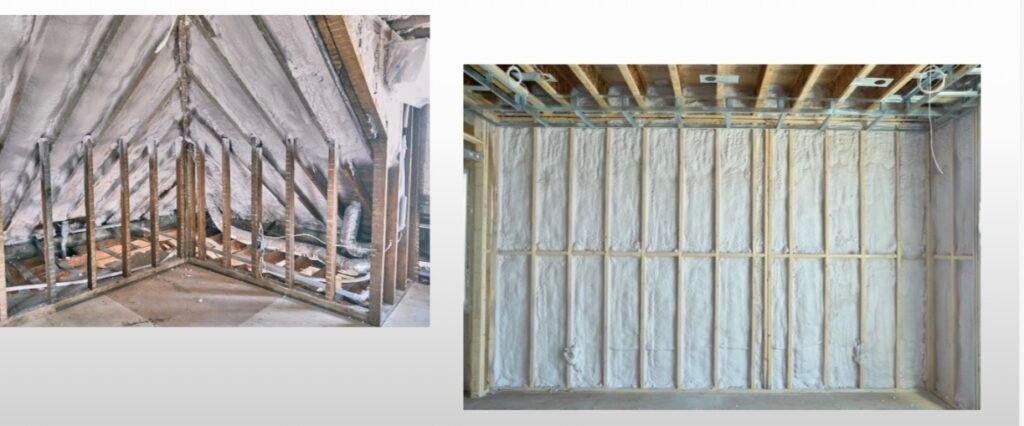
Before signing any insulation contract for a grant-eligible project in Barrie, confirm every item below:
- Contractor has reviewed your pre-retrofit energy audit report before quoting
- Contractor can name specific grant programs they have completed projects under
- Contractor confirms in writing that no work begins before audit is filed
- Contractor can provide a sample invoice showing product name, R-value, zone, and area
- Contractor can provide manufacturer spec sheets for all proposed products before signing
- Contractor is not applying pressure to decide before your audit is complete
- Contractor can provide a reference from a certified energy advisor familiar with their work
- Contractor’s quote is consistent with market range for the scope proposed
What a Good Grant Contractor Looks Like in Practice
| Category | Red Flag Contractor | Grant-Ready Contractor |
|---|---|---|
| Quoting process | Quotes before seeing audit report | Requests audit report before quoting |
| Grant knowledge | Vague references to “rebates” | Names specific programs and amounts |
| Timing | Suggests starting prep work early | Confirms no work before audit filed |
| Documentation | Single-line invoices | Itemized by product, R-value, zone, area |
| Product specs | “I’ll get those to you” | Provides spec sheets before contract signing |
| Pressure | Urgency to sign immediately | Supports your audit-first timeline |
| Advisor relationship | No connection to any advisor | Names advisors who have verified their work |
| Pricing | Significantly below market | Consistent with market range for scope |
About Trust Build Windows and Doors
Trust Build Windows and Doors serves homeowners across Barrie, the GTA, Durham Region, and Kawartha Lakes. We believe the best home improvement decisions are informed ones — which is why our in-home consultants come to you with physical window and door samples, glass demonstrations showing the real differences between double and triple-pane options, steel versus fiberglass door frame comparisons side by side, and complete product catalogues. You see and feel every option in your own home before deciding anything.
We offer 0% financing for 12 months on qualifying projects. No showroom. No pressure — ever.